
Best company-information.service.gov.uk alternatives for South Africa 2026
Discover the best company-information.service.gov.uk alternatives for South Africa in 2026. Explore options for enriched company data!
Best company-information. service.


TL;DR: Quick Answer
Discover the best company-information.service.gov.uk alternatives for South Africa in 2026. Explore options for enriched company data!
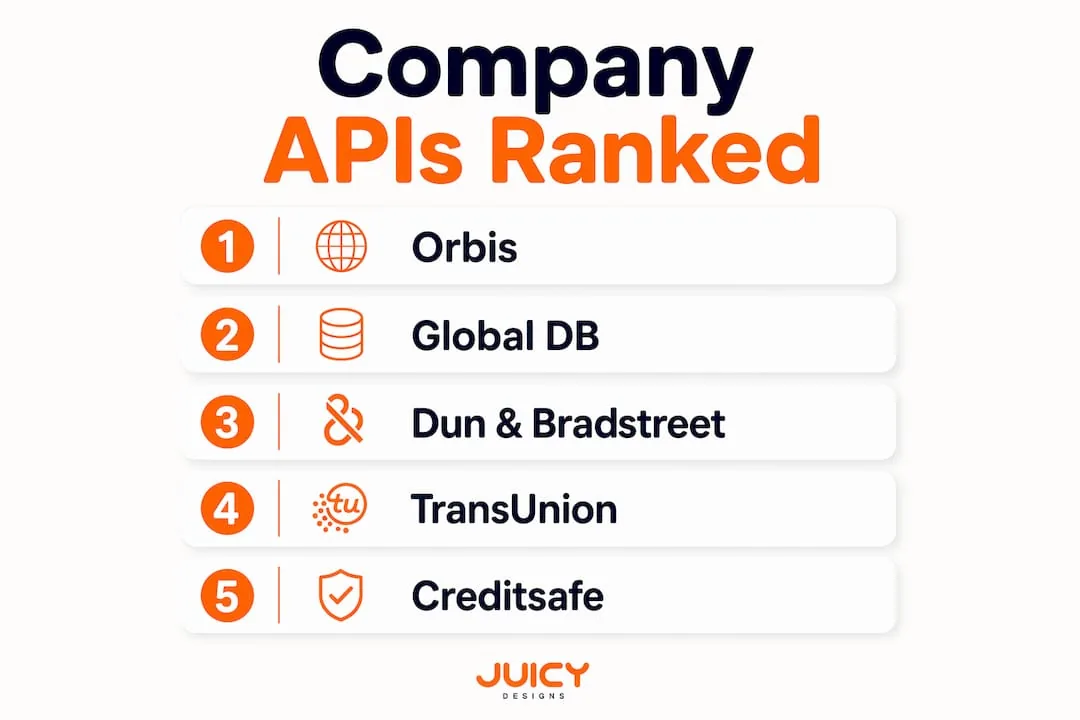
If you need company data beyond UK borders, the top alternatives to company-information.service.gov.uk are Global Database, Orbis by Bureau van Dijk, Dun & Bradstreet South Africa, TransUnion South Africa, and Creditsafe South Africa. Each covers South African company records with enriched data that the official Companies House API simply does not offer.
Here is a quick-reference list of the leading options for South African business professionals and developers:
- Global Database, sources data directly from over 400 government registries worldwide, with verified ownership, financials, and CRM enrichment via a flexible API.
- Orbis by Bureau van Dijk, deep private company financials and ownership maps, including South African entities, suited for investment research and compliance.
- Dun & Bradstreet South Africa, credit scores, firmographics, and CRM integrations built specifically for South African risk and supplier management.
- TransUnion South Africa, credit and commercial data with API integrations aligned to local regulatory requirements.
- Creditsafe South Africa, supplier credit reports and risk assessments with quick API integration for South African company data.
- Duedil, UK-focused but useful for cross-border research when your operations span both the UK and South Africa.
- Kompass, global business directory with South African regional coverage, well suited for lead generation and industry classification.
What does the company-information.service.gov.uk API actually offer?
The Companies House Developer Hub provides a live, real-time API for retrieving information on UK limited companies registered under the Companies Act 2006. For UK-focused compliance tasks, it is genuinely useful. The data is free at the basic tier, and the API is straightforward to query.
That said, the platform has real constraints that matter for South African users.
What it covers:
- Company profile data: registered name, number, status, and address
- Director and officer appointments
- Filing history and confirmation statements
- Basic financial accounts (often stored as PDFs, not structured data)
- Dissolved company search
Where it falls short for South Africa:
- Coverage is UK-only. South African company data from the Companies and Intellectual Property Commission (CIPC) is not included.
- Raw filings are frequently stored as PDFs, making them difficult to parse programmatically. Third-party providers add real value by converting these into structured, searchable datasets.
- No credit scores, risk signals, or ultimate beneficial owner (UBO) data in the free tier.
- No CRM enrichment or sales prospecting features.
The XML gateway offers more programmatic access, but it carries a monthly subscription fee plus additional per-request charges. Since April 2025, Companies House has been phasing in mandatory identity verification using biometric passports or driving licences. This improves UK register transparency but does nothing to extend geographic coverage or data depth for South African use cases.
Pro Tip: If you only need basic UK company status checks, the free Companies House API is sufficient. For anything involving South African entities, credit risk, or CRM enrichment, you need a dedicated alternative.
How to choose the right company data API for South Africa
Picking the right platform comes down to matching the tool to your actual workflow. Here are the criteria that matter most.
Geographic coverage
The first question is whether the platform covers South African companies registered with the CIPC, not just UK or European entities. Some global providers include South Africa in their registry network; others treat it as a secondary market with limited depth.
Data depth
For compliance and credit workflows, you need more than a company name and address. Look for platforms that offer financials, UBO mapping, credit scores, and director histories. Orbis by Bureau van Dijk and Dun & Bradstreet South Africa both go deep here. A platform that only mirrors raw registry filings will leave gaps in your due diligence process.
Update frequency and data provenance
Stale data creates real risk. Ask providers how often their South African records are refreshed and whether they source directly from official registries or aggregate from third parties. Global Database, for instance, connects directly to government registries rather than relying on intermediary data vendors.
API availability and developer experience
If you are building a compliance workflow or enriching a CRM, the API needs to be well-documented, RESTful, and supported with clear rate limits and error handling. Platforms like Creditsafe South Africa and TransUnion South Africa offer API integrations designed with local compliance requirements in mind.
Pricing in South African Rand
Enterprise platforms like Orbis and Dun & Bradstreet typically quote custom pricing. For South African teams, it is worth requesting ZAR-denominated contracts to avoid currency exposure. Creditsafe and Global Database offer more accessible entry points, though exact ZAR pricing varies by volume and use case.
Additional features
CRM enrichment, risk signals, and data enrichment capabilities separate the specialist platforms from basic registry mirrors. If your team uses Salesforce or HubSpot, Dun & Bradstreet's CRM connector and Global Database's enrichment API are worth evaluating. For B2B marketing in South Africa, having clean, enriched company data directly in your CRM can significantly improve segmentation and targeting.
Top company data API alternatives compared: features and pricing
The platforms below represent the strongest options for South African business professionals and developers in 2026. Pricing in South African Rand reflects market context; where providers do not publish ZAR rates publicly, this is noted.
| Provider | Coverage | Data depth | API availability | Update frequency | Best for | ZAR pricing |
|---|---|---|---|---|---|---|
| Global Database | 400+ registries globally, incl. SA | Financials, ownership, UBO, credit reports | Flexible REST API, well-documented | Near real-time from registries | CRM enrichment, compliance, KYB | On request |
| Orbis by Bureau van Dijk | Global, strong SA private company data | Deep financials, ownership maps, EDF-X scoring | Enterprise API | Regular structured updates | Investment research, credit risk | Custom enterprise pricing |
| Dun & Bradstreet South Africa | South Africa and global | Credit scores, firmographics, risk signals | Salesforce connector, REST API | Frequent local updates | Supplier due diligence, CRM | Custom ZAR quotes available |
| TransUnion South Africa | South Africa, aligned to CIPC | Credit and commercial risk data | Compliance-aligned API | Regular, locally regulated | Credit risk, regulatory compliance | On request |
| Creditsafe South Africa | South Africa focus | Credit reports, risk assessments | Quick-integration API | Regular | Supplier risk monitoring | On request |
| Duedil | UK primary, some cross-border | Enriched UK filings, director histories | REST API | Regular | UK-SA cross-border research | GBP-denominated |
| Kompass | Global, South Africa included | Business directory, SIC classifications | Flexible API | Regular | Lead generation, prospecting | On request |
Global Database
Global Database stands out for compliance and KYB (Know Your Business) workflows because it sources data directly from official government registries rather than aggregating from third-party vendors. That distinction matters when you need an audit trail. The platform covers financials, ownership structures, and contact data, and its API supports CRM enrichment for tools like Salesforce and HubSpot. For South African teams building compliance pipelines, the registry-direct sourcing model reduces the risk of acting on outdated or unverified records.
Orbis by Bureau van Dijk
Orbis is the go-to for investment research and deep financial analysis. Its ownership mapping capability is particularly strong, tracing beneficial ownership chains across multiple jurisdictions. South African private company coverage is included, and the platform's EDF-X credit scoring model is widely used in enterprise risk management. The trade-off is cost and procurement time: Orbis is an enterprise product with custom pricing and a longer sales cycle.
Dun & Bradstreet South Africa
Dun & Bradstreet has operated in the South African market long enough to build genuine local expertise. Their D&B Rating is an industry-recognised credit scoring standard, and their firmographic data integrates directly with major CRM platforms. For procurement teams running supplier due diligence or credit teams assessing counterparty risk, Dun & Bradstreet remains the most established name in the local market.

TransUnion South Africa
TransUnion's South African operation focuses on credit and commercial risk data, with API integrations designed to align with local regulatory requirements. Their data refresh cycles track local compliance updates, which matters for businesses operating under South African financial regulations. The platform suits credit risk workflows more than sales prospecting.
Creditsafe South Africa
Creditsafe offers a faster path to integration than the larger enterprise platforms. Their API is designed for quick deployment, and their credit reports cover South African company risk assessments with enough depth for most supplier monitoring use cases. For smaller teams or businesses that need supplier risk data without a lengthy enterprise procurement process, Creditsafe is a practical starting point.
Duedil
Duedil is primarily a UK platform, but it earns a place on this list for businesses with operations on both sides. Its structured data layer over raw Companies House filings makes it significantly more useful for developers than the raw API. If your team needs to cross-reference UK and South African entities, Duedil handles the UK side well.
Kompass
Kompass covers South Africa as part of its global business directory, with industry classifications and regional data useful for lead generation and market research. It is not a credit risk tool, but for sales teams building prospect lists by sector or geography, the broad coverage and flexible API make it a practical choice.
How to verify a company's legitimacy and trading status in South Africa
Checking whether a South African company is legitimately registered and actively trading requires a different approach than the UK's Companies House lookup. The primary official source is the Companies and Intellectual Property Commission (CIPC), which maintains the South African company register.
Step-by-step verification process:
- Search the CIPC register at cipc.co.za using the company name or registration number. This confirms whether the entity is registered and its current status (active, deregistered, or in liquidation).
- Check the company's tax compliance status via the South African Revenue Service (SARS) Tax Compliance Status (TCS) system. A valid TCS pin confirms the company is tax-compliant, which is a separate check from registration status.
- Verify BEE credentials if relevant to your procurement process. The B-BBEE Commission maintains records of verified BEE certificates.
- Use a third-party API such as Creditsafe South Africa, TransUnion South Africa, or Dun & Bradstreet South Africa to pull credit reports and risk signals that the CIPC register does not provide.
- Cross-reference director information against the CIPC's director records and any available court or insolvency records to identify undisclosed risk.
The CIPC register confirms registration, but it does not tell you whether a company is financially healthy, actively trading, or free from undisclosed liabilities. Third-party platforms fill that gap. For account-based marketing or B2B prospecting, combining CIPC verification with a credit report from Creditsafe or Dun & Bradstreet gives you a much clearer picture before you invest time in a prospect.
Pro Tip: Always request a company's CIPC registration certificate and latest annual return confirmation before entering a significant commercial agreement. Cross-check the registration number against the CIPC portal directly rather than relying solely on documents provided by the company.
Data accuracy, identity verification, and compliance challenges in South Africa
The UK's identity verification reforms at Companies House offer a useful lens for understanding the limits of official registry data, and those limits apply equally to South African company records.
"Verification establishes that a real person exists, that they hold a valid identity document, and that the document matches the name used for Companies House filings. It is a point-in-time identity check, not ongoing monitoring of conduct or control. A nominee director with a valid passport or driving licence can be fully verified. That does not make them the real decision-maker."
This verification paradox applies directly to South African company data. The CIPC register confirms that a director's identity documents match the filing, but it cannot tell you whether that director exercises genuine control, whether the company is a front for undisclosed beneficial owners, or whether the entity is actively trading.
Key compliance challenges for South African users:
- Data completeness gaps: South African registry filings are not always current. Annual returns can lag, and director changes may not be reflected immediately.
- UBO disclosure limitations: Beneficial ownership disclosure requirements in South Africa are still maturing. Third-party platforms that map ownership chains provide intelligence the official register does not.
- POPIA compliance: The Protection of Personal Information Act (POPIA) governs how you collect, store, and use personal data in South Africa. Using company director data for marketing or prospecting requires a lawful basis under POPIA. First-party data strategies and POPIA-compliant data practices are worth building into your workflow from the start.
- Internal record synchronisation: Businesses that rely on official registry data for compliance workflows need to sync their internal records with registry updates. A mismatch in a director's date of birth between your CRM and the official register can cause verification failures and operational delays. The same principle applies in South Africa: audit your internal data against CIPC records regularly.
- Shadow directorship and nominee risk: As Satori Intelligence notes for the UK context, verified status does not eliminate the risk of nominee directors or undisclosed control structures. South African due diligence should look beyond registered directors to connected parties, common addresses, and prior directorship patterns.
The practical recommendation is to treat official registry data as a starting point, not a conclusion. Platforms like Orbis by Bureau van Dijk and Dun & Bradstreet South Africa layer additional intelligence on top of registry filings, which is where the real due diligence value sits.
How South African businesses are using these platforms in practice
The use cases for company data APIs in South Africa cluster around three core workflows: credit risk, compliance, and sales prospecting.
Credit and supplier risk management is the most mature use case locally. South African banks, insurers, and large corporates have used Dun & Bradstreet and TransUnion South Africa for supplier due diligence and credit decisioning for years. The D&B Rating is widely recognised in procurement processes, and TransUnion's commercial data feeds into credit decisioning systems across the financial services sector.
Compliance and KYB workflows are growing rapidly, driven by tightening Financial Intelligence Centre Act (FICA) requirements and increased scrutiny of beneficial ownership. Global Database's registry-direct sourcing model is well-suited here because it provides the audit trail that compliance teams need to demonstrate data provenance. Orbis by Bureau van Dijk serves the same need at the enterprise level, particularly for financial institutions running complex ownership mapping exercises.
Sales prospecting and CRM enrichment is where platforms like Kompass and Global Database differentiate themselves from pure credit tools. A South African B2B sales team building a prospect list by industry, company size, and geography can use Kompass's directory data to generate targeted lists, then enrich those records in their CRM using Global Database's API. The result is a cleaner, more segmented pipeline than a scattergun approach to outbound. For teams investing in marketing automation in South Africa, enriched company data is what separates a well-targeted campaign from one that wastes budget on poorly qualified leads.
Creditsafe South Africa has found traction with mid-market businesses that need supplier risk monitoring without the procurement overhead of an enterprise contract. Their quick-integration API means a developer can have supplier credit checks running in a production environment within days rather than weeks.
Key takeaways
The best company data API for South Africa depends on your specific workflow, but registry-direct sourcing, local coverage, and compliance-grade data depth are the non-negotiable criteria for 2026.
| Point | Details |
|---|---|
| Official API is UK-only | The company-information.service.gov.uk API covers UK companies only; South African CIPC data requires a dedicated local or global provider. |
| Data depth separates platforms | Credit scores, UBO mapping, and risk signals are absent from basic registry APIs; platforms like Orbis and Dun & Bradstreet South Africa fill this gap. |
| Verification has limits | Identity verification confirms a person exists but does not confirm genuine control, creditworthiness, or business intent, in both UK and South African contexts. |
| POPIA compliance is mandatory | Using director or company data for marketing in South Africa requires a lawful basis under POPIA; build compliant data practices from the start. |
| Juicydesigns for data-driven growth | Juicydesigns helps South African B2B teams turn verified company data into targeted, measurable marketing campaigns with no long-term contracts. |
The real gap in South African company data strategies
Most businesses in South Africa treat company data as a compliance checkbox rather than a growth asset. That is a missed opportunity.
The platforms covered in this article do the heavy lifting on verification and risk. But verified data sitting in a spreadsheet or a compliance system does not generate pipeline. The businesses that get the most value from platforms like Dun & Bradstreet South Africa or Global Database are the ones that connect enriched company data directly to their marketing and sales workflows.
There is also a tendency to over-rely on official registries. The CIPC register and the Companies House API are starting points, not endpoints. A company can be fully registered, tax-compliant, and BEE-verified while still being a poor commercial prospect or a genuine risk. The intelligence that matters comes from layering credit data, ownership maps, and trading history on top of the official record.
For South African developers building compliance or KYB products, the identity verification reforms at Companies House are worth watching as a model. The UK's phased implementation, which requires directors to verify by mid-November 2026, shows how registry transparency can improve without solving the deeper problem of undisclosed control. South Africa's own beneficial ownership disclosure requirements are moving in the same direction.
The practical takeaway: choose your data provider based on what you will do with the data, not just what it costs. A cheaper platform that lacks UBO data or has infrequent updates will cost you more in missed risk than the premium you save on the subscription.
Juicydesigns turns company data into real pipeline for South African businesses
Verified company data is only as useful as the marketing strategy behind it. Juicydesigns works with South African B2B businesses to build full-funnel campaigns that use enriched company data for precise targeting, not guesswork. Where most agencies hand your account to a junior team, Juicydesigns delivers founder-led service with direct communication and a proven average return on ad spend of 4.8x. There are no long-term contracts and no agency overhead. Whether you need Google Ads, SEO, or account-based marketing campaigns built on clean company data, the approach focuses on measurable results, not vanity metrics. Get a free proposal and see what a data-informed campaign looks like for your South African market.
FAQ
How do I check if a South African company is legitimately registered?
Search the CIPC register at cipc.co.za using the company name or registration number. For a fuller picture, cross-reference with a third-party credit report from Creditsafe South Africa or Dun & Bradstreet South Africa.
Is the company-information.service.gov.uk API free to use?
Basic company data from the Companies House API is free. The XML gateway, which offers programmatic access to structured data, carries a monthly subscription fee plus additional per-request charges.
Does identity verification at Companies House confirm a company is legitimate?
No. Identity verification confirms that a real person holds a valid identity document matching their filing name. It does not verify business intent, creditworthiness, or whether the registered director exercises genuine control.
How can I check if a UK company is still active?
Search the company name or number on find-and-update.company-information.service.gov.uk. The register shows current status, including whether a company is active, dormant, or dissolved.
Which company data API works best for South African compliance workflows?
Global Database and Orbis by Bureau van Dijk are the strongest options for compliance and KYB workflows because both offer registry-sourced data with audit trails and ownership mapping. For purely local South African credit risk, Dun & Bradstreet South Africa and TransUnion South Africa are the established choices.
Recommended
- Digital marketing in South Africa: 2026 guide | Juicy Designs
- South Africa social media marketing setup: 2026 guide | Juicy Designs
- How to Choose a GEO Agency in South Africa
- Advertising in South Africa: a 2026 guide | Juicy Designs