
Dentist Marketing in South Africa: An HPCSA-Safe Guide
How to market a dental practice in South Africa without breaching HPCSA rules: local search, social media, email under POPIA, and realistic monthly costs in rand.
Dentist Marketing in South Africa: An HPCSA-Safe Guide ! Patient searching online for a nearby dentist Dentist marketing in South Africa works when it does two things at once: it helps patients in your area find you and understand your services, and it stays inside the ethical rules of the Health Professions Council of South Africa (HPCSA).


TL;DR: Quick Answer
How to market a dental practice in South Africa without breaching HPCSA rules: local search, social media, email under POPIA, and realistic monthly costs in rand.
Key takeaways
- Very cheap quotes (under R5,000) almost always exclude copywriting, SEO, custom design and post-launch support
- On-page SEO built into the website at launch costs a fraction of what it costs to retrofit after the site is live
- Hosting, SSL, domain and maintenance add R3,000-R10,000 per year on top of build cost
- E-commerce adds significant cost due to payment gateway integrations, product data, security requirements and checkout UX
- Timeline and client responsiveness directly affect cost: slow feedback rounds extend agency hours

Dentist marketing in South Africa works when it does two things at once: it helps patients in your area find you and understand your services, and it stays inside the ethical rules of the Health Professions Council of South Africa (HPCSA). The channels that do this best are local search (Google Business Profile and a fast, clear website), educational social media, consent-based email to your own patient list, and a small, tightly controlled Google Ads budget. Below we show how each fits together, what the rules allow, and what it costs in rand.
TL;DR
- Compliance comes first. The HPCSA does not allow canvassing (drawing attention to your personal qualities, superior knowledge or guarantees) or touting (enticing patients with material benefits). Educate and inform instead of boasting.
- Start with local search. A complete Google Business Profile and a website with clear service and location pages bring in patients who are already looking for a dentist near them.
- Use social media to educate. A SADJ-published study reports that 93.6% of surveyed practitioners found social media beneficial for practice growth when used correctly.
- Email and SMS need consent. Under POPIA, electronic direct marketing to new leads requires their prior consent, and existing patients must always get an easy opt-out.
- Budget realistically. A focused SEO, Google Ads or social programme for a single practice typically starts between R5,500 and R6,000 per month with us, with no long-term contract.
Why dental practices need a marketing plan now
South Africa has a stretched oral health workforce. The National Department of Health's 2030 Human Resources for Health Strategy lists 6,155 dental practitioners and 661 dental therapists, and the planners describe a widening gap in oral health personnel. That means demand for dental care is real, and many patients struggle to reach specialised support in the public sector.
Does that mean you can sit back? Not quite. Patients who do seek a private dentist compare options online before they call. They search for a dentist in their suburb, look at reviews, check your website on their phone and then decide. If your practice is hard to find or the website says little, the patient books with the practice that is easier to understand.
Good marketing for a dentist is therefore less about shouting and more about being easy to find, easy to trust and easy to book. That also suits the regulator.
What the HPCSA allows and what it does not
Before you spend a rand on promotion, understand the boundaries. Breaching them is the most costly mistake a practice can make, because the board concerned may take disciplinary steps when a practitioner fails to comply with the ethical rules.
The HPCSA's own advertising guidance for practitioners allows you to advertise your services, provided the advertisement is not unprofessional, untruthful, deceptive or misleading. It also separates two things you must avoid:
- Canvassing: drawing attention to your personal qualities, superior knowledge, quality of service, professional guarantees or "best practice". A line such as "the best dentist in town" is the classic example.
- Touting: drawing attention to your offering by employing guarantees or material benefits outside professional services. The HPCSA's own example of canvassing is advertising free Wi-Fi in the waiting room, because it falls outside the services you render.
The rules also cover third parties. If an agency or a staff member does canvassing or touting on your behalf, the HPCSA treats it as yours.
The definitions have been amended over time, so read the current text. The amendment to the ethical rules is published on gov.za, and your practice's legal adviser or SADA can confirm how it applies to a specific campaign.
Practical dos and don'ts
| Do | Avoid |
|---|---|
| Describe the treatments you offer and who they suit | Claiming to be the best, leading or most experienced in your area |
| Publish patient education on gum disease, children's dental care, and what to expect at a check-up | Promising results or guarantees |
| Show your qualifications, registration details and practice hours factually | Giveaways, prize draws or perks unrelated to dental services |
| Answer reviews politely and without disclosing patient information | Letting an agency or influencer post promotional claims in your name |
If an idea sits in a grey area, leave it out or ask your professional association first. We have written a wider guide to HPCSA-safe medical practice marketing that applies to dentists as well.
Local search: the foundation of dentist marketing
Most new patients look for a dentist close to home or work. That makes local search your highest-value channel, and it is also the most compliance-friendly, because it is informational by nature.
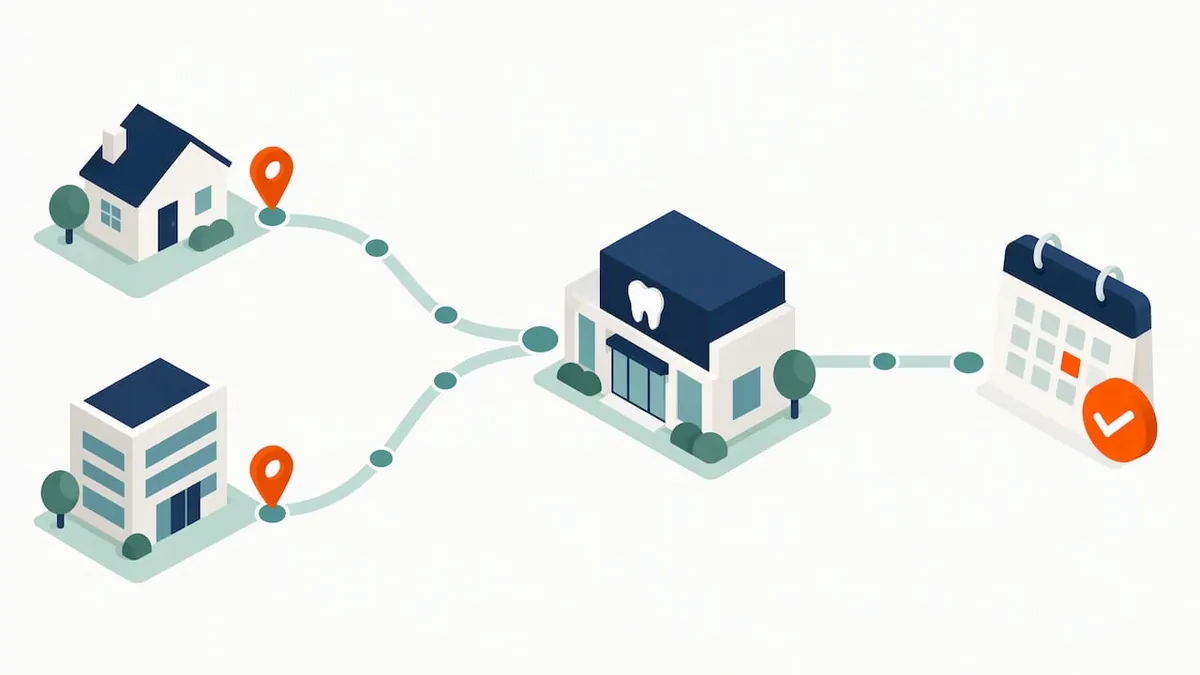
Google Business Profile
Your Google Business Profile is the listing that appears in the map results. Get these basics right:
- Claim and verify the listing under your exact practice name, address and phone number.
- Choose accurate categories (for example, dentist, plus any registered specialty you actually practise).
- List your treatments as services, in plain language.
- Add real photos of the practice, the reception and the surgery exterior so patients know where to park and walk in.
- Keep trading hours current, including public holidays and load-shedding arrangements if they affect you.
- Respond to every review in a courteous, general way. Never confirm a person was your patient or discuss their treatment in public.
Our guides on ranking in Google Maps in South Africa and Google Business Profile setup walk through each step. If your practice is in Gauteng's biggest metro, see our Johannesburg local search guide.
Your website
A dental website does not need to be elaborate. It needs to answer the questions a patient has before they phone:
- A separate page for each main treatment (check-ups and cleaning, fillings, extractions, orthodontics, implants, whitening and so on), written in plain English and, where your area calls for it, in other languages your patients speak.
- A page for each location if you have more than one rooms, with the address, map, parking and contact details.
- Medical aid information stated factually, such as which schemes you work with, without implying discounts or incentives.
- A fast, mobile-friendly layout with a visible call or booking button, since most local searches happen on phones.
Our guide to ranking on Google in South Africa covers the technical groundwork, and the SEO glossary entry explains the terms if you are new to them.
What local SEO costs
Our SEO plans are published openly. The Foundation plan is R5,500 per month and the Authority plan is R24,000 per month, both on our SEO pricing page. If you would like to know where your site stands first, a once-off SEO audit starts from R8,000.
Social media that stays professional
Social media suits dentistry because it lets you teach. The SADJ study found that most surveyed practitioners considered it beneficial for practice growth when used correctly, and it encourages sharing patient education and information instead of aggressive promotion that could be classed as touting.
Content that works
- Short explainers: why gums bleed, how often children should see a dentist, what a root canal involves.
- Practice introductions: your team, your rooms, how a first visit runs.
- Seasonal reminders: back-to-school check-ups or end-of-year medical aid benefit reminders.
- Behind-the-scenes hygiene and sterilisation routines, described factually.
Content to avoid
- Before-and-after claims that imply a guaranteed result.
- Competitions or prizes tied to booking.
- Posts that rank you above other dentists.
- Any patient image or story shared without clear, written consent.
A calendar of two or three consistent posts a week beats a burst of activity followed by silence. If you want a view of what to look for in a provider, our article on the best social media agency for dental practices in SA lists the questions to ask. Our social media plans are Presence at R6,000 per month and Premium at R18,000 per month, detailed on the social media pricing page.
Google Ads for dentists: small, controlled and measurable
Paid search puts your practice in front of patients at the exact moment they type "emergency dentist" or "teeth whitening" with your suburb. Because every click costs money, it also rewards discipline.
A sensible approach for a single practice:
- Start narrow. Target your suburb and neighbouring areas, not the whole province.
- Bid on treatment searches that match what you offer. Exclude terms you do not want, such as "free" or "cheap".
- Write factual ad copy. Name the treatment, location and how to book. Leave out superlatives and guarantees.
- Track calls and form submissions. Count booked consultations, not just clicks.
- Review weekly, adjust monthly. Move budget to the searches that produce appointments.
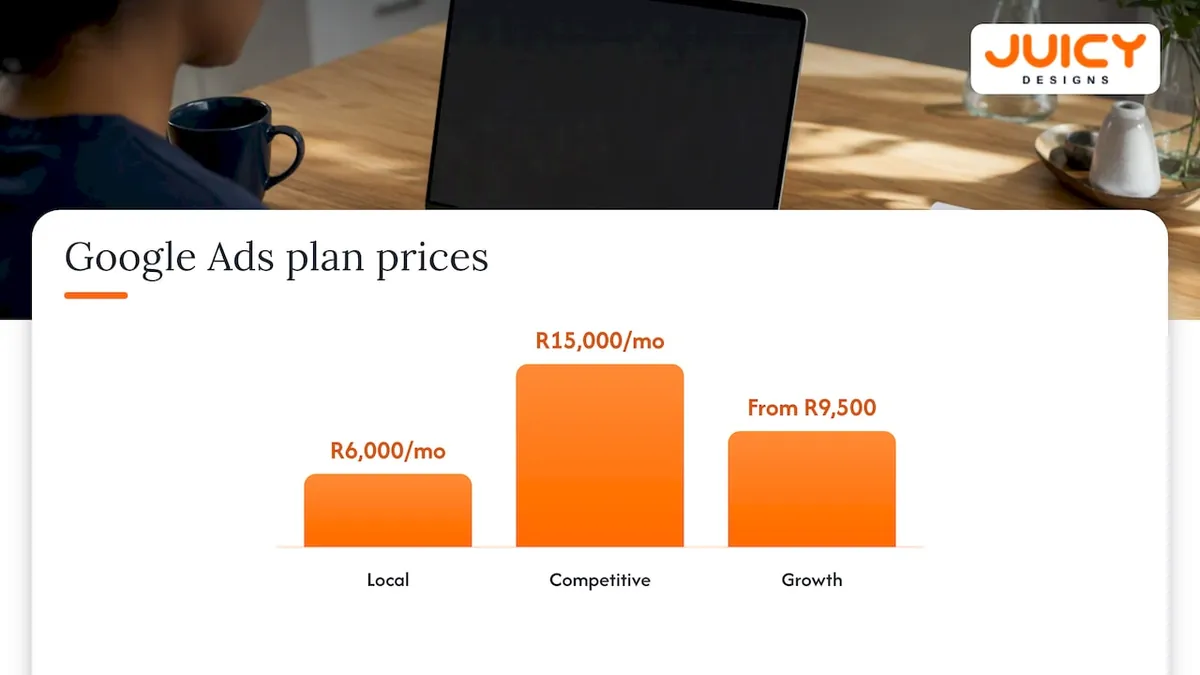
Our Local Google Ads plan is R6,000 per month, the Competitive plan is R15,000 per month, and Growth starts from R9,500 per month. A once-off setup starts from R4,500 and an account audit from R3,500, if you already run ads and want a second opinion. Details are on our Google Ads pricing page. Ad spend itself is paid to the platform and is separate from management fees.
Email and SMS to patients: what POPIA requires
Recall reminders and check-up emails are among the most useful things a practice can send, but electronic direct marketing is regulated. Section 69 of POPIA outlaws direct marketing by electronic communication such as emails and SMSs unless the person has given consent.
In practice:
- New leads: get prior, voluntary, specific and informed consent. If someone declines, do not approach them again.
- Existing patients: you have more room if the message relates to your own similar services, but every message must include a clear, easy opt-out.
- Content: keep it informational. A reminder that a check-up is due is fine. A discount to entice a booking raises touting concerns.
- Records: store the consent record with the patient's contact details.
Our email marketing services start from R3,500 per month, and SMS marketing from R1,500 per send. Both are listed on our digital marketing page. For the basics of segmenting a list, see our email segmentation guide.
Referrals, reputation and the quiet channels
SADA's leadership notes that the most effective marketing rests on professional reputation and compliance, and that operational excellence drives retention and referrals. SADA membership also gives members access to free, editable marketing and social media templates designed for South African practices, plus the D-Calc™ profitability tool.
This points to something many agencies skip: marketing begins in the practice. Short waiting times, clear treatment plans, polite reception and a consistent recall system generate reviews and word of mouth that no campaign can replace. Digital marketing then makes that reputation visible.
When reviews arrive, treat them as part of your patient care. Thank reviewers in general terms, never reveal clinical details, and take complaints offline quickly.
How to measure whether it is working
Vanity numbers such as likes and impressions do not fill appointments. Track these instead:
| Metric | Why it matters |
|---|---|
| Calls and bookings from Google Business Profile | Shows local search is converting |
| Form submissions and online booking requests | Shows website quality |
| New patients by source (ask at first visit) | Connects marketing to the chair |
| Cost per booked new patient from ads | Tells you whether to scale or cut |
| Recall rate and returning patients | Shows email and reminder value |
Ask reception to note how each new patient found you. It costs nothing and gives you better data than any dashboard.
Our perspective on dental marketing
We are a Pretoria agency, and the dentists and medical practices we speak to usually have the same two worries: "Will this get me in trouble with the HPCSA?" and "Will I be locked into a contract?"
Our view is that the first worry should shape the whole plan. Compliant dental marketing is education-led, factual and local. It is slower to dress up and faster to trust. We do not write copy that claims you are the best, and we would rather build you a Google Business Profile and treatment pages that work every day than a loud campaign you have to defend later.
On the second worry, we work month to month with no long-term contracts, and you speak directly to the founders, not an account manager. We measure what matters: calls, bookings and cost per new patient. Across our client work we report an average return on ad spend of 4.8x, and a premium Pretoria dealership group saw qualified leads rise 312% from a full-funnel programme. Those results come from automotive work, not dentistry, so we treat them as proof of our method (track, test, adjust) and not as a promise for your practice. Every practice is different, and we will tell you plainly if a channel is not worth your budget yet.
If you are starting from nothing, our advice is to fix the foundation first: profile, website, reviews process. Add social and email once that is steady, and consider paid search when you have capacity for more patients.
, Cobus
Where we can help
If you would like a second pair of eyes on your practice's visibility, we can start small. A once-off SEO audit from R8,000 shows what is holding your website back in search, and our monthly plans scale from there. You can also see everything we offer on our pricing page or get in touch to talk to the founders directly.
FAQ
Can a dentist advertise in South Africa?
Yes. The HPCSA allows practitioners to advertise their services as long as the advertisement is not unprofessional, untruthful, deceptive or misleading. What is prohibited is canvassing and touting, such as claiming to be the best or offering benefits outside professional services.
How much should a dental practice spend on marketing?
There is no single figure, because it depends on your location, competition and capacity for new patients. As a starting point, our published plans for a single practice begin at R5,500 per month for SEO, R6,000 for Google Ads management and R6,000 for social media, and you can begin with one channel only. Ad spend paid to the platform is additional.
Can I send marketing emails or SMSs to my patients?
Only within POPIA. New leads must give prior consent, and existing patients can receive messages about your own similar services if every message carries a simple opt-out. Keep the content informational and ask your legal adviser about any promotional offer.
Is social media worth it for a dental practice?
It can be. A study in the South African Dental Journal found that 93.6% of surveyed practitioners considered it beneficial for growth when used correctly. The key is to focus on patient education rather than promotion that could count as touting.
Sources
- Advertising guidelines for practitioners, HPCSA
- Regulation Gazette No. 8518, Ethical Rules of Conduct
- Health Professions Act: Ethical rules of conduct, amendment
- 2030 Human Resources for Health Strategy, National Department of Health
- South African Dental Journal, November 2022
- Benefits of SADA membership
- Records management, PAIA and POPIA policy
Recommended
- Medical Practice Marketing South Africa (HPCSA-Safe)
- Best Social Media Agency for Dental Practices in SA 2026
- Social Media Marketing Compliance and Law in South Africa
- Best SEO Agencies for Medical Practices in SA 2026