
Google Ads setup for car dealerships: 2026 guide
Master the google ads setup car dealership process with our 2026 guide. Boost leads and test drives by using paid search effectively.
Google Ads setup for car dealerships: 2026 guide ! Marketer setting up Google Ads at car dealership > TL;DR: > > - Effective Google Ads for South African car dealerships rely on real-time inventory feeds and campaign segmentation to target high-intent buyers.



TL;DR:
- Effective Google Ads for South African car dealerships rely on real-time inventory feeds and campaign segmentation to target high-intent buyers. Building proper accounts, optimising landing pages for mobile, and monitoring campaigns weekly enhance lead quality and conversion rates. Continuous refinement and integration with organic SEO create a complete digital presence that drives results.
Google Ads setup for car dealerships is the process of configuring paid search campaigns around live vehicle inventory and buyer intent signals to generate qualified leads and booked test drives. 92% of car buyers in South Africa complete their research online before stepping into a showroom. That single fact changes everything about where your marketing budget should go. Paid search puts your stock in front of buyers at the exact moment they are searching, and this guide walks you through every step of getting it right for the South African market in 2026.

What do you need before setting up Google Ads for your dealership?
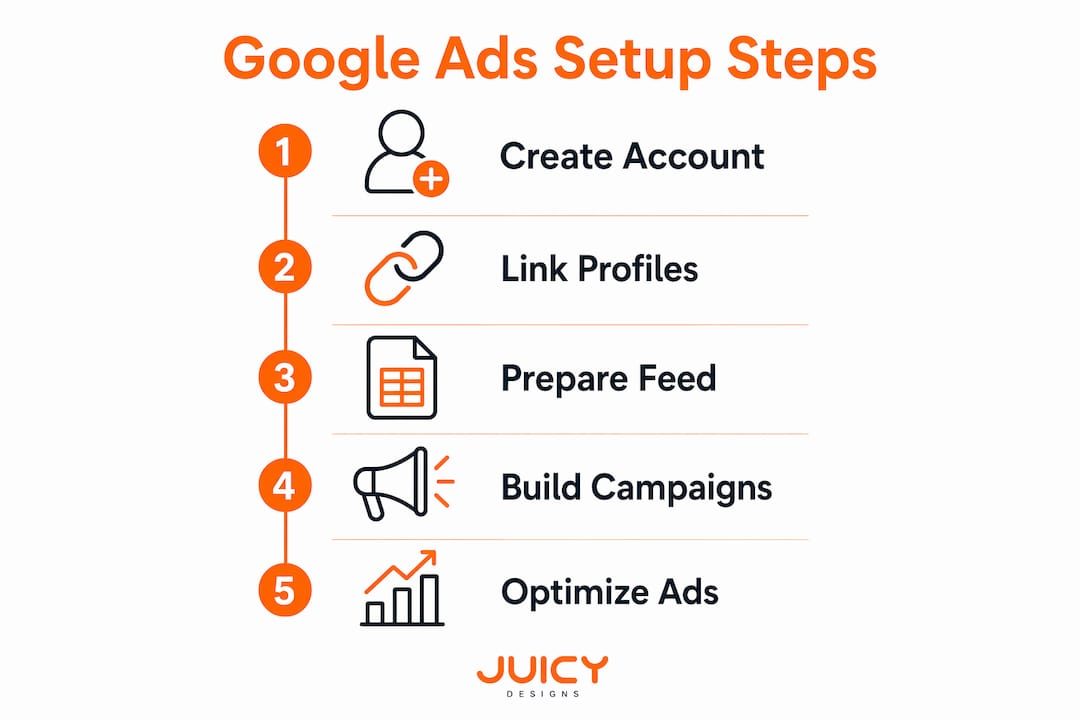
A solid Google Ads setup for car dealerships starts with the right accounts and data, not the ads themselves. Skipping this foundation is the most common reason campaigns underperform from day one.
Accounts and access you need:
- A Google Ads account linked to your dealership’s Google Business Profile
- A Google Merchant Center account connected to your Google Ads account
- A verified website with a working SSL certificate (https)
- Google Analytics 4 installed and linked to Google Ads for conversion tracking
- Access to your vehicle inventory management system or a data feed export
Vehicle inventory data requirements:
Your data feed is the engine behind dynamic automotive ads. Each vehicle listing needs accurate attributes including make, model, year, price (in South African rand), mileage, condition (new or used), VIN, and a high-quality image URL. South African dealerships also need to include the correct location data so Google can serve ads to buyers in the right province or city.
| Requirement | Details |
|---|---|
| Google Ads account | Create at ads.google.com and link to your Business Profile |
| Google Merchant Center | Required for vehicle listing ads and dynamic inventory feeds |
| Vehicle data feed | CSV or XML file with make, model, price in ZAR, images, and location |
| Conversion tracking | Set up via Google Tag Manager or direct site tag |
| Landing pages | Dedicated pages per vehicle category, mobile-optimised |
Pro Tip: Before you spend a single rand on ads, verify that your Google Business Profile is fully complete. Dealerships with complete profiles see stronger local ad performance and higher click-through rates from Google Maps placements.
How to structure your Google Ads campaigns to maximise lead quality
Campaign structure determines whether your budget works hard or gets wasted. The best Google Ads strategies for car dealerships separate campaigns by intent, vehicle type, and geography.
-
Performance Max campaigns run across all Google channels including Search, YouTube, Display, and Maps. Use these for broad awareness and to capture buyers early in their research phase. Feed them strong creative assets and your full vehicle inventory.
-
Search campaigns target high-intent keywords like “used Toyota Hilux for sale Pretoria” or “new Volkswagen Polo dealer Johannesburg.” These buyers are close to a decision. Allocate your highest cost-per-click bids here.
-
Vehicle listing ads (powered by your Merchant Center feed) show your actual stock with images, prices, and dealership name directly in search results. Feed-driven campaigns outperform manually managed campaigns in the automotive sector because they reflect real-time stock and pricing.
-
Display and YouTube campaigns work best for retargeting. A buyer who viewed a specific model on your website but did not enquire is a warm lead. Show them that exact vehicle again across the web.
Segment your campaigns by:
- Location: Gauteng, Western Cape, KwaZulu-Natal as separate campaigns if you have multiple branches
- Vehicle category: SUVs, bakkies, sedans, commercial vehicles
- Stock type: new vehicles vs. used vehicles, as buyer intent and messaging differ significantly
Pro Tip: Set a separate budget for used vehicle campaigns. Used car buyers in South Africa are highly price-sensitive and respond better to ads that lead with monthly instalment figures rather than total price.
Aligning your automotive ad campaigns with buyer intent at each stage of the funnel is what separates a profitable campaign from one that burns budget.
How do you integrate live vehicle inventory into Google Ads?
Dynamic inventory ads are the single biggest advantage dealerships have in paid search. They automatically update when stock changes, so you never advertise a vehicle that has already sold.
Steps to connect your inventory:
- Export your vehicle stock as a data feed (CSV or XML) from your dealer management system
- Upload the feed to Google Merchant Center under the “Vehicles” feed type
- Map each attribute correctly: make, model, year, price in ZAR, mileage, condition, VIN, image link, and dealership location
- Schedule automatic feed refreshes daily or every 12 hours to keep pricing and availability current
- Link your Merchant Center account to Google Ads and enable vehicle listing ads in your campaign settings
Accurate pricing matters more than most dealers realise. South African automotive marketplace searches exceed 649 million per year. Buyers compare prices across multiple platforms before clicking. If your ad shows one price and your landing page shows another, you lose the lead immediately.
Common feed errors to watch for including mismatched VINs, missing image URLs, and prices listed without VAT clarity. Google will disapprove listings with incomplete or inconsistent data. Check your Merchant Center diagnostics tab weekly, especially after a bulk stock update.
A unified digital and physical experience builds the same trust online that your sales team builds on the showroom floor. Your inventory feed is the first step towards that experience.
What are the best practices for landing pages and conversion funnels?
Getting clicks is only half the job. Poor UX and complex enquiry forms cause many South African dealership ads to generate traffic but zero leads. Your landing page must do the conversion work your ad started.
Landing page non-negotiables for South African dealerships:
- Mobile-first design with a page load time under three seconds. Most South African buyers browse on mobile, often on data-limited connections.
- Pricing displayed in ZAR with VAT included. Hiding the price creates friction and distrust.
- A short enquiry form with no more than four fields: name, phone number, email, and vehicle of interest.
- Finance options displayed prominently. Finance pathways are critical in South African vehicle purchase journeys, and dealerships that highlight monthly instalments on landing pages convert at a higher rate.
- A click-to-call button visible without scrolling, especially on mobile.
- Consistent messaging between your ad headline and your landing page headline. If your ad says “2023 Ford Ranger Double Cab from R8,999/month,” your landing page must say the same thing immediately.
Pro Tip: Add a WhatsApp chat button to your landing pages. South African buyers are far more likely to start a conversation on WhatsApp than to fill in a form. This single addition can meaningfully increase your lead volume without changing anything else.
The marketing funnel for a car purchase is longer than most product categories. Your landing page needs to capture the lead now, even if the buyer is not ready to purchase today.
How do you monitor and refine your dealership campaigns for ongoing results?
Launching a campaign is the start, not the finish. The dealerships that get the best results from Google Ads treat campaign management as a weekly discipline, not a monthly check-in.
-
Track the right KPIs. Focus on cost per lead, lead-to-test-drive conversion rate, and click-through rate by campaign. Impressions and clicks are vanity metrics unless they connect to enquiries.
-
Check your search term reports weekly. You will find irrelevant searches spending your budget. Add negative keywords like “free,” “DIY,” and competitor model names you do not stock to stop wasted spend.
-
Monitor your inventory feed health. A disapproved vehicle listing means lost impressions for that stock. Review Merchant Center diagnostics every week, especially after price updates.
-
Test ad creatives systematically. Run two to three headline variations per ad group and let Google’s system identify the top performer over a two-week window before making changes.
-
Use retargeting to close warm leads. Retargeting buyers with ads featuring the specific vehicle model they viewed significantly increases conversion chances. This tactic is underused by South African dealerships and delivers strong results when set up correctly.
Google Ads AI-powered features in 2026 offer faster creative generation and sharper audience targeting. Use these tools, but always review automated suggestions before applying them. Automation works best when it has clean data and clear conversion goals to learn from.
Pairing your paid campaigns with local SEO creates a compounding effect. Buyers who see your ads and then find your dealership organically are more likely to convert than those who only see one channel.
Key takeaways
Effective Google Ads for South African car dealerships requires live inventory feeds, high-intent campaign segmentation, and mobile-optimised landing pages that highlight ZAR pricing and finance options.
| Point | Details |
|---|---|
| Build the foundation first | Link Google Ads to Merchant Center and set up conversion tracking before spending any budget. |
| Segment campaigns by intent | Separate Search, Performance Max, and retargeting campaigns to match each stage of the buyer journey. |
| Feed your inventory dynamically | Sync live vehicle data daily so ads always reflect current stock, pricing, and availability in ZAR. |
| Optimise landing pages for mobile | Keep forms to four fields, show finance options, and add a WhatsApp button to reduce abandonment. |
| Refine weekly, not monthly | Check search terms, feed health, and cost per lead every week to catch wasted spend early. |
What I have learned running Google Ads for South African dealerships
The biggest mistake I see dealerships make is treating Google Ads as a set-and-forget system. They spend the first month getting the setup right, then check back 90 days later wondering why the results have dropped. Paid search is a living system. The market shifts, stock changes, and buyer intent evolves.
The second thing I have noticed is that most dealerships underestimate the role of the landing page. They invest in the ad and ignore what happens after the click. A buyer who lands on a slow, generic page with a seven-field form will leave. That click cost you money and produced nothing.
The South African automotive buyer’s journey is non-linear. Buyers move between Google searches, AutoTrader listings, YouTube reviews, and WhatsApp conversations before they ever walk into your showroom. Your Google Ads campaign is one part of that journey, not the whole story. Dealerships that integrate search, social media, and reviews as connected signals win consideration at the early decision stage. Those that treat each channel in isolation lose buyers to competitors who show up more consistently.
My honest advice: get the feed right, get the landing page right, and then focus on weekly optimisation. The dealerships that do these three things consistently outperform those with bigger budgets and messier setups.
By Cobus
How Juicydesigns helps South African dealerships get Google Ads right
Juicydesigns works directly with South African car dealerships to build and manage Google Ads campaigns that produce measurable leads, not just clicks. The team has delivered a 312% increase in qualified leads for a local dealership, with an average return on ad spend of 4.8x across clients. Every campaign is managed by the founders, with no account managers or middlemen between your dealership and the people making decisions. Pricing is flexible, contracts are not long-term, and every campaign is built around your specific stock, location, and sales goals. If you are ready to put your Google Ads management in experienced hands, Juicydesigns offers a free Google Ads proposal tailored to your dealership’s budget and market.
FAQ
What is the minimum budget for Google Ads at a South African dealership?
There is no fixed minimum, but most South African dealerships see meaningful lead volume starting from R5,000 to R10,000 per month in ad spend. Budget requirements vary by location, competition, and vehicle category.
How long does it take to see results from Google Ads for a dealership?
Most dealerships see initial lead data within the first two weeks of a live campaign. Meaningful optimisation data typically accumulates over four to six weeks, which is when bid and targeting adjustments produce the strongest results.
Do I need Google Merchant Center for dealership ads?
Yes. Google Merchant Center is required to run vehicle listing ads, which show your actual stock with images and pricing directly in search results. These ads consistently outperform standard text ads for automotive inventory.
Why are my dealership ads getting clicks but no leads?
Complex enquiry forms and mismatched messaging between ads and landing pages are the most common causes. Simplify your form to four fields and make sure your landing page headline matches your ad headline exactly.
Should I run Google Ads and SEO at the same time?
Running both together produces better results than either channel alone. Paid ads deliver immediate visibility while SEO builds long-term organic traffic, and buyers who see both channels are more likely to convert.
Recommended
- Dealership Google Ads: Complete 2026 Setup Guide
- Digital Marketing for Car Dealerships in South Africa
- Car Dealership Digital Marketing Strategy 2026 | Juicy
- Automotive Lead Generation: Dealership Playbook 2026