
Programmatic advertising in entertainment: 2026 guide
Programmatic advertising in entertainment is the automated buying of ad inventory through real-time bidding, using audience data rather than manually negotiated insertion orders.
It lets a campaign follow viewers across streaming, display and connected TV while shifting spend as performance data arrives.



TL;DR:
- Programmatic advertising uses data-driven algorithms to automate ad buying across digital entertainment channels. It improves targeting, efficiency, and measurement, but waste and brand safety risks remain without proper governance. Combining AI, private marketplaces, and quality inventory enhances campaign performance and accountability.
Programmatic advertising in entertainment is defined as the automated buying and placement of digital ads using data-driven algorithms to target specific audiences across video, streaming, digital out-of-home (DOOH), and social channels. The industry term is “programmatic advertising,” and understanding what is programmatic advertising in entertainment means understanding how real-time technology replaces manual media buying with precision and speed. The Interactive Advertising Bureau (IAB) governs standards across programmatic ecosystems globally, and South African entertainment marketers are increasingly adopting these frameworks. For brands in film, music, sports, and streaming, programmatic advertising for media is no longer optional. It is the primary mechanism for reaching audiences at scale without wasting budget on the wrong people.
What is programmatic advertising in entertainment marketing?
Programmatic advertising is the automated process of buying digital ad inventory through technology platforms rather than direct negotiation with publishers. In entertainment, this means a streaming service, cinema brand, or live events company can place ads in front of the right viewer at the right moment without a single phone call to a media buyer. The system works through an auction that happens in milliseconds every time a user loads a page or opens an app.
The core technology stack includes three components:
- Demand-side platforms (DSPs): Software that advertisers use to bid on available ad inventory across multiple publishers simultaneously.
- Supply-side platforms (SSPs): Software that publishers use to make their inventory available and maximise revenue from each impression.
- Ad exchanges: The marketplace where DSPs and SSPs connect and auctions happen in real time.
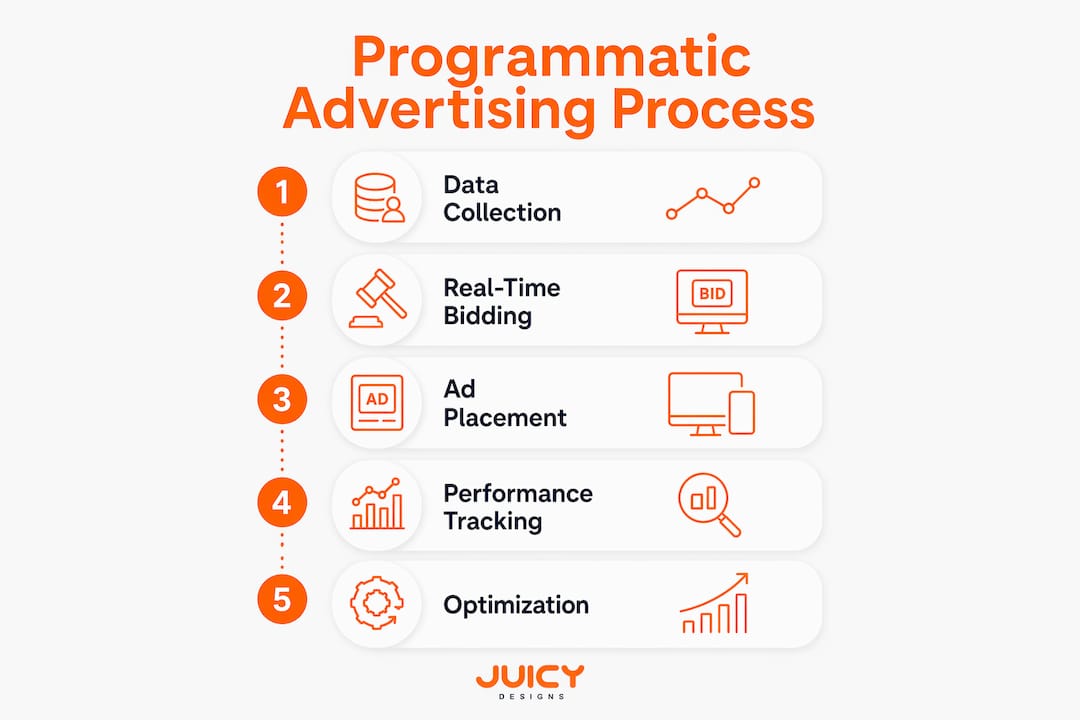
Real-time bidding (RTB) is the auction mechanism that powers most programmatic transactions. When a user opens a streaming app, the SSP sends an auction request to the ad exchange, DSPs evaluate the user’s data profile, and the winning bid places the ad before the content loads. The entire process takes under 100 milliseconds. Entertainment inventory types include pre-roll video, mid-roll video, OTT (over-the-top streaming) placements, DOOH screens at cinemas and malls, and paid social formats.
Pro Tip: Data privacy compliance is not optional in programmatic campaigns. South African marketers must align with the Protection of Personal Information Act (POPIA) when using first-party and third-party audience data for targeting. Non-compliance creates legal risk and erodes audience trust.

You can read a plain-English breakdown of the full programmatic ecosystem if you want to go deeper on the technology before running your first campaign.
What are the benefits and challenges of programmatic ads in entertainment?
Programmatic advertising delivers four clear benefits for entertainment marketers: precise audience targeting, budget scalability, real-time performance measurement, and access to premium inventory across multiple channels simultaneously. A cinema brand can target adults aged 25 to 44 who recently searched for action films, serve them a trailer ad on a streaming platform, and measure how many clicked through to buy tickets. That level of precision was impossible with traditional media buying.
The performance numbers from AI-driven programmatic campaigns in South Africa show what is achievable. One campaign achieved a 96% video completion rate and a 7.65% engagement rate, significantly outperforming industry benchmarks. Those results confirm that well-executed programmatic campaigns in entertainment can drive genuine audience engagement, not just impressions.
The challenges are equally real. Supply chain complexity is the biggest threat to budget efficiency. Only 36 cents of every programmatic dollar actually reaches a consumer, with the rest absorbed by intermediary fees and low-quality inventory. That means for every R100,000 you spend programmatically, only R36,000 worth of ads reach a real person.
- Ad spend waste: Complex supply chains consume a large portion of budgets before a single impression is served to a real viewer.
- Brand safety risks: Automated placements can appear next to inappropriate content, which is especially damaging for entertainment brands that rely on audience trust.
- Creative disconnect: Programmatic efficiency often prioritises volume over the quality of the creative experience, reducing emotional impact.
- Consumer trust erosion: Automation in entertainment marketing can alienate audiences when ads feel intrusive or misaligned with the content they are watching.
“Programmatic advertising should not replace trust-based environments. Genuine audience connection relies on credible spaces around ads, not just algorithmic efficiency.”
The governance gap makes this worse. An estimated 40% of South Africa’s programmatic ad spend is wasted or funds misinformation. Most boards are unaware this is happening. For entertainment brands, that waste directly reduces the budget available for creative production and audience growth.
How is AI enhancing programmatic advertising performance in entertainment?
AI is the engine that makes programmatic advertising genuinely useful rather than just fast. Without AI, programmatic is simply automated buying. With AI, it becomes a system that learns, adapts, and improves campaign performance in real time. The role of AI in marketing strategies has expanded rapidly, and entertainment is one of the sectors benefiting most from this shift.
AI contributes to programmatic performance in four specific ways:
- Dynamic creative optimisation (DCO): AI tests multiple versions of an ad in real time and serves the version most likely to resonate with each individual viewer based on their behaviour and context.
- Audience segmentation: AI analyses first-party data from streaming platforms, ticketing systems, and social channels to build precise audience clusters beyond basic demographics.
- Bid optimisation: AI adjusts bids in real time based on predicted conversion probability, reducing wasted spend on low-value impressions.
- Predictive analytics: AI forecasts which inventory placements will deliver the highest engagement for a given campaign objective, such as trailer views or event ticket sales.
The South African campaign that delivered a 96% video completion rate used AI-powered programmatic buying to optimise delivery in real time. That result demonstrates how AI shifts programmatic from a media buying tool into a performance engine. For entertainment marketers, this means trailer placements, event promotions, and subscription campaigns can all improve continuously throughout the campaign flight.
Pro Tip: AI handles the heavy lifting of bid management and creative testing, but human strategists must set the objectives, define brand safety parameters, and review performance weekly. Automation without oversight produces efficient waste, not efficient results.
What best practices should entertainment marketers follow for programmatic campaigns?
Effective programmatic campaigns in entertainment require governance, transparency, and a clear measurement framework. Most campaigns that underperform do so because of supply chain problems, not creative problems.
- Demand supply chain transparency: Require your DSP or agency to provide a full breakdown of where your budget goes, including all intermediary fees. Tools like TrustList help identify low-quality inventory and redirect spend to trusted publishers.
- Prioritise IAB-accredited publishers: Buying from IAB-accredited inventory sources reduces brand safety risk and increases the probability that your ads appear in quality environments.
- Use private marketplace (PMP) deals: Private marketplace deals give advertisers more control over inventory quality and pricing than open auction buying, particularly for live sports and premium streaming content.
- Build direct DOOH relationships: Direct relationships with DOOH media owners provide sophisticated targeting without excessive intermediary fees, making cinema and mall screen advertising far more efficient.
- Shift to attention metrics: Attention-focused metrics like time-in-view and engagement rate predict campaign impact far better than click-through rate (CTR) or cost per thousand impressions (CPM).
| Metric type | What it measures | Why it matters for entertainment |
|---|---|---|
| Video completion rate | Percentage of viewers who watch the full ad | Indicates genuine interest in the content or brand |
| Engagement rate | Interactions divided by impressions | Shows active audience response beyond passive viewing |
| Time-in-view | Seconds an ad is visible on screen | Correlates with brand recall and message retention |
| CTR | Clicks divided by impressions | Useful for direct response but weak for brand building |
Combining verified inventory with attention-based measurement gives entertainment marketers a clear picture of what is actually working. You can also explore paid social ad types that complement programmatic buying across entertainment channels.
Examples of programmatic advertising campaigns in entertainment and their impact
Programmatic advertising examples in entertainment show how the technology performs across very different campaign objectives. The most instructive cases involve AI-driven optimisation, multi-channel delivery, and a shift away from open auction buying.
-
Streaming trailer campaigns: A streaming platform uses programmatic buying to place pre-roll video ads on entertainment news sites and social platforms. AI optimises delivery towards users who have previously searched for similar genres, driving higher trailer completion rates and measurable subscription sign-ups.
-
Live sports advertising: Broadcasters and sponsors use private marketplace deals to secure premium inventory around live match broadcasts. This approach delivers guaranteed viewership quality and brand safety that open auction buying cannot match.
-
Cinema and DOOH promotion: Entertainment brands use programmatic DOOH to serve dynamic ads on screens near cinemas, adjusting creative based on time of day, weather, and local event schedules. Direct relationships with DOOH inventory owners reduce intermediary costs and improve targeting accuracy.
-
AI-optimised lifestyle campaigns: A South African campaign using AI-powered programmatic delivery achieved results that demonstrate the format’s potential. The campaign recorded a 96% video completion rate and a 7.65% engagement rate, both well above standard benchmarks for the region.
| Campaign type | Key channel | Primary metric | Outcome |
|---|---|---|---|
| Streaming trailer | OTT pre-roll | Video completion rate | Higher subscription conversion |
| Live sports | Private marketplace | Brand safety score | Premium audience quality |
| Cinema DOOH | Out-of-home screens | Footfall attribution | Reduced cost per visit |
| AI-optimised lifestyle | Multi-channel | Engagement rate | 7.65% engagement, 96% completion |
The lesson across all these cases is consistent. Campaigns that combine precise targeting, quality inventory, and AI optimisation outperform those that rely on open auction volume alone. AI-driven search and visibility strategies are reshaping how entertainment brands think about audience reach beyond traditional programmatic channels.
Key takeaways
Programmatic advertising in entertainment works best when AI-driven targeting, supply chain transparency, and attention-based measurement are combined with consistent human oversight.
| Point | Details |
|---|---|
| Define programmatic correctly | It is automated, data-driven ad buying across video, OTT, DOOH, and social channels. |
| Address supply chain waste | Up to 40% of programmatic spend is wasted; governance tools and IAB-accredited publishers reduce this. |
| Use AI for optimisation | AI improves bid efficiency, creative testing, and audience segmentation in real time. |
| Shift to attention metrics | Time-in-view and engagement rate predict brand impact better than CTR or CPM. |
| Prioritise private marketplaces | PMP deals give entertainment marketers better inventory control than open auction buying. |
Automation is not a strategy: my honest take on programmatic in entertainment
I have worked with entertainment brands that went all-in on programmatic automation and came back frustrated. The campaigns ran. The impressions stacked up. But the results were hollow because no one was asking the right questions about where the budget was actually going.
The uncomfortable truth is that human strategists remain indispensable in programmatic advertising. Automation handles execution, but it cannot define what success looks like for your brand. A live music brand and a streaming service have fundamentally different audience relationships, and no algorithm understands that without human input.
What I have seen work consistently is a governance-first approach. Before you touch a DSP or set a bid strategy, audit your supply chain. Understand how much of your budget reaches a real person. Then build your targeting and creative strategy around verified, quality inventory rather than volume.
The shift towards private marketplace deals is the most encouraging trend I see in entertainment programmatic right now. It signals that the industry is moving away from the scattergun approach of open auction buying towards something more deliberate and accountable. That is good for brands, good for publishers, and ultimately good for audiences.
, Cobus
How Juicy Designs helps entertainment brands run programmatic campaigns that actually work
Juicy Designs is a Pretoria-based digital marketing agency that works directly with entertainment businesses on programmatic campaign strategy, supply chain governance, and creative integration. There are no middlemen. You work with the founders, which means faster decisions and campaigns built around your specific audience and budget. Juicy Designs delivers an average return on ad spend of 4.8x, nearly double the industry standard, with South African pricing and no long-term contracts. If you want to run programmatic campaigns that reach real audiences and produce measurable results, get a Google Ads proposal or contact the team directly to discuss your entertainment marketing goals.
FAQ
What is programmatic advertising in entertainment?
Programmatic advertising in entertainment is the automated buying and placement of digital ads across video, OTT, DOOH, and social channels using data-driven algorithms and real-time bidding to target specific audiences efficiently.
How does programmatic advertising work for media buyers?
A demand-side platform bids on available ad inventory in real time through an ad exchange, using audience data to place ads in front of the right viewer within milliseconds of a page or app loading.
What percentage of programmatic ad spend is wasted in South Africa?
An estimated 40% of South Africa’s programmatic ad spend is wasted or funds misinformation, making supply chain transparency and governance tools a priority for local entertainment marketers.
What metrics should entertainment marketers track in programmatic campaigns?
Attention-focused metrics like video completion rate, time-in-view, and engagement rate predict campaign impact more accurately than click-through rate or cost per thousand impressions.
What is a private marketplace deal in programmatic advertising?
A private marketplace (PMP) deal is a direct arrangement between an advertiser and a publisher that gives the advertiser access to premium inventory with more control over placement quality and pricing than open auction buying.