
Why video marketing dominates entertainment: a marketer's guide
Discover why video marketing is key to entertainment success, combining sensory appeal and social reach for unmatched engagement.
Video marketing dominates entertainment because it combines sensory attention, emotional narrative, and social shareability into a single asset that no static format can match.


TL;DR: Quick Answer
Discover why video marketing is key to entertainment success, combining sensory appeal and social reach for unmatched engagement.
Video marketing dominates entertainment because it combines sensory attention, emotional narrative, and social shareability into a single asset that no static format can match. In South Africa, video accounts for 82.2% of all data consumed, and CTV ad revenue is forecast to grow significantly between 2023 and 2028. For entertainment marketers, the strategic implication is clear: invest now in short-form for reach, live formats for real-time engagement, and CTV for premium addressable placements, then measure every stage with conversion-lift experiments rather than vanity metrics.
Key takeaways
| Point | Details |
|---|---|
| Video dominates data consumption | Video accounts for 82.2% of all data consumed in South Africa, making it the default content format. |
| CTV is a growing revenue channel | CTV ad revenue is forecast to grow significantly between 2023 and 2028, opening premium placements for entertainment brands. |
| Measure with conversion lift, not views | Advertisers running 15+ creative experiments per year saw a 30% performance gain in year one and 45% the following year. |
| Repurpose every hero shoot | One production session should yield 6-12 platform-specific assets to maximise cost per view and distribution speed. |
| Juicydesigns delivers full-funnel video strategy | Juicydesigns manages video production, paid distribution, and measurement for South African entertainment brands with a high average ROAS. |
Why video marketing dominates entertainment: the core drivers
Video wins because it works on three levels simultaneously: it captures attention, builds emotion, and travels socially. No other format does all three at once.
The three primary drivers:
- Attention: Moving images draw the eye faster than text or static visuals. On a crowded social feed, motion triggers an involuntary gaze response, giving video a head start before a single word is read. YouTube is the clearest proof of this at scale, with 76% of South Africans using it to decide what to buy, making it a discovery engine as much as an entertainment platform.
- Emotion: Narrative pacing combined with a soundtrack creates an emotional arc that static content cannot replicate. A 30-second trailer with the right music and a well-timed reveal generates recall that a banner ad simply cannot produce. That recall translates directly into search demand after viewing.
- Shareability: A single memorable moment inside a longer video can become a clip, a meme, or a reaction video. TikTok's entire architecture is built around this mechanic, and entertainment brands that engineer a "shareable moment" into every asset extend their reach without additional media spend.
Each driver maps to a measurable outcome. Attention drives view completion, which predicts brand recall. Emotion drives search lift after exposure. Shareability drives organic reach and user-generated content (UGC) that multiplies the original investment.
Pro Tip: When briefing a video shoot, identify the single 15-second moment most likely to be clipped and shared. Build the production around making that moment land perfectly. Everything else in the asset supports it.
For entertainment brands specifically, creating viral short-form video starts with this discipline: engineer the shareable hook first, then build the longer narrative around it.
Which formats and platforms give you the best results?
Each platform favours different creative lengths and viewer behaviours. Matching your objective to the right format is where most entertainment campaigns either gain or lose efficiency.
| Format | Best objective | Production cost | Best entertainment use |
|---|---|---|---|
| Short-form (vertical, 15-60s) | Awareness, reach, viral hooks | Low | Teasers, challenge clips, influencer cuts |
| Long-form (2min+, 16:9) | Storytelling, trailers, consideration | Medium, High | Full trailers, documentaries, series previews |
| Livestream | Real-time engagement, commerce | Low, Medium | Concerts, premieres, Q&A events |
| CTV / OTT / FAST | Premium awareness, addressable TV | Medium, High | Brand spots, pre-roll on streaming platforms |
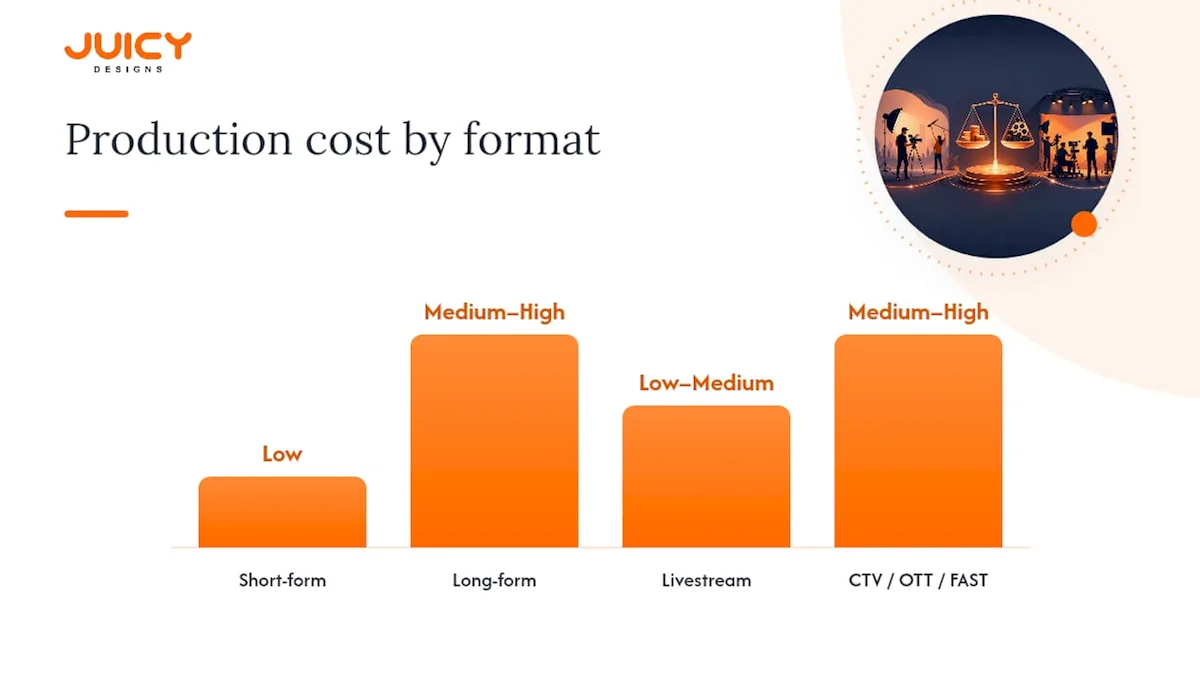
Short-form on TikTok and Instagram Reels drives top-of-funnel reach and can be engineered to create mid-funnel search demand when paired with platform-first calls to action and follow-up long-form content. Long-form on YouTube and streaming platforms carries the storytelling weight: trailers, behind-the-scenes features, and series previews all perform here because viewers arrive with intent and patience. Livestreams convert real-time attention into merchandise sales and ticket purchases at the moment of peak excitement. CTV sits at the premium end, offering the sightlines of traditional television with the targeting precision of digital.
The Africa Entertainment and Media Outlook projects CTV ad revenue in South Africa more than doubling by 2028, which signals a genuine commercial opportunity for entertainment brands willing to build CTV-ready creative now rather than later.
A practical note on format: shoot your hero asset in 16:9 for CTV and YouTube, then reframe key moments vertically for short-form. Distributing both from a single shoot cuts cost per view significantly. For short-form content strategy specific to South African platforms, the principle holds: one shoot, multiple formats, broader reach.
How entertainment brands use video across the funnel
Entertainment uses video at every stage: teasers create anticipation, trailers convert interest into intent, appointment-to-view content drives tune-in, and post-event material sustains fandom. The marketing funnel is not a straight line for entertainment consumers, and video is the connective tissue that holds each stage together.
High-value use cases:
- Festival and event trailers: A well-timed trailer released 4-6 weeks before ticket sales open creates search demand and drives direct booking spikes. Short-form teasers on TikTok and Reels in the two weeks before release amplify this effect.
- Influencer teasers: Creator-led previews of streaming releases or live events generate authentic social proof and reach audiences who skip traditional advertising. Influencer partnerships work particularly well when the creator's audience overlaps with the entertainment brand's target demographic.
- Behind-the-scenes content: This format builds fan loyalty and retention by making audiences feel like insiders. For subscription-based entertainment brands, behind-the-scenes series reduce churn by deepening the emotional connection between fans and talent.
- Live streams: Real-time concert streams, film premieres, and sports events create a commerce window. Pinned product links, merchandise drops, and ticket upsells during a live stream convert at higher rates than post-event promotions because the emotional peak is live.
The operational principle that ties all of this together: pipeline content from one shoot to supply multiple formats. A single concert shoot produces a highlight reel, a 60-second social cut, three influencer clips, and a behind-the-scenes featurette. Video advertising for SMEs and independent entertainment brands follows the same logic, making the economics work even on modest production budgets.
How do you measure video ROI across the funnel?
Measure video with full-funnel metrics, not views alone. A high view count with no downstream conversion signal tells you nothing about commercial impact.
Funnel-stage metrics:
- Top of funnel (TOF): Reach, view rate, view-through rate. These measure how many people saw your content and how many stayed past the first few seconds.
- Middle of funnel (MOF): Watch time, engagement rate, website lift. Watch time predicts recall; website lift (measured via GA4) shows whether video exposure is driving search and direct traffic.
- Bottom of funnel (BOF): Conversions, conversion lift, sales lift. This is where you prove commercial impact.
| Metric | Recommended tool | Sample KPI |
|---|---|---|
| View rate | YouTube Analytics | 30%+ view-through on 30s ads |
| Engagement rate | Meta Business Suite | 4%+ on Reels and Stories |
| Website lift | Google Analytics 4 | 15%+ uplift in organic sessions post-campaign |
| Conversion lift | TikTok Ads Manager / Meta lift studies | Statistically significant lift vs. control |
| Sales lift | GA4 + server-side data | Positive ROAS at campaign level |
Full-funnel video measurement research shows that advertisers who run at least 15 creative experiments per year saw a 30% performance increase in that year and a 45% increase the following year. That cadence is the difference between a brand that guesses and one that compounds learning. Platform tools like YouTube Analytics, Meta Business Suite, and TikTok Ads Manager provide the raw data, but conversion-lift studies and controlled experiments are what attribute real sales impact rather than correlation.
Pair platform data with server-side tracking in GA4 to reduce attribution gaps caused by ad blockers and iOS privacy changes. For entertainment brands running paid video distribution, YouTube marketing and Google Ads measurement work best when platform signals are validated against first-party conversion data.
Why production cost is no longer the main barrier
Production costs sit on a spectrum, and the right workflow matters more than budget size. A smartphone shoot with a skilled editor can outperform a studio production if the story and the hook are stronger.
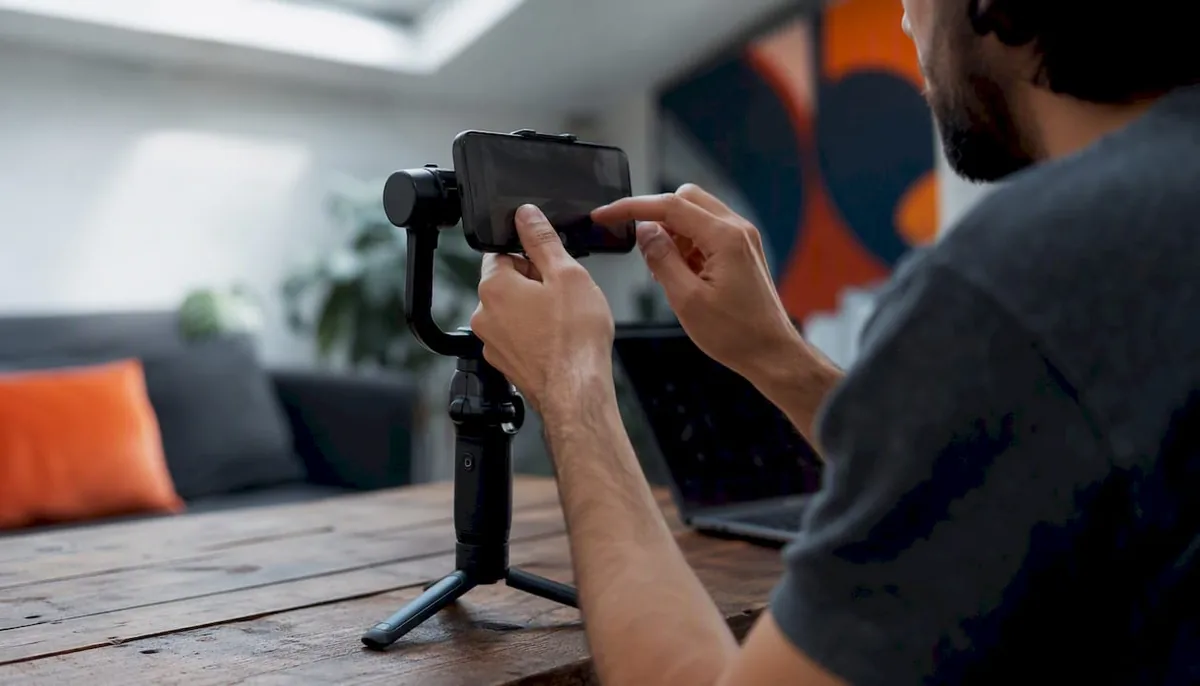
Modern workflow pattern: write a story-first brief, shoot a hero long-form asset, then immediately edit for 6-12 platform-specific shorts (vertical edits, 16:9 cuts, 30-60 second trailers), following how aesthetic videography supports high-quality brand production. This approach maximises production return and distribution speed without requiring a new shoot for every platform.
Rough cost brackets in South African rand give you a working framework:
- In-house smartphone shoot: R2,000, R8,000 for basic equipment and editing software. Suitable for behind-the-scenes content, social stories, and UGC-style posts.
- Mid-range freelance production: R15,000, R60,000 for a videographer, basic lighting, and post-production. Covers short-form social ads, event highlights, and influencer content.
- Full studio or agency production: R80,000, R300,000+ for broadcast-quality trailers, CTV spots, and high-production brand films.
The brand video on a budget guide for South African brands shows that the middle tier, when paired with a repurposing workflow, often delivers the best cost per view across platforms.
Pro Tip: After your next hero shoot, brief your editor to produce a content batch: one 90-second cut for YouTube, three 30-second cuts for paid social, and six 15-second vertical clips for TikTok and Reels. One shoot, ten assets, a fraction of the cost per placement.
Generative tools now assist with subtitling, rough cuts, and thumbnail creation, reducing post-production time further. The barrier to consistent video output has never been lower for South African entertainment brands.
Why localised video performs better in South Africa
Localisation increases resonance in South Africa because culturally relevant cues drive stronger emotional connections and higher sharing rates than generic global creative. Authenticity outperforms polish when the audience can see themselves in the content.
Practical localisation tactics:
- Use local languages (isiZulu, Afrikaans, Sesotho, and others) in dialogue, captions, and on-screen text to signal cultural belonging and increase sharing within language communities.
- Cast local talent that reflects the diversity of your audience. Familiar faces and authentic accents build trust faster than aspirational but distant imagery.
- Incorporate local music, whether original compositions or licensed South African artists, to create an emotional signature that resonates with local viewers.
- Produce low-bandwidth edits: shorter file sizes, clear subtitles, and progressive download formats reduce drop-off during load-shedding or on metered data connections.
- Use geo-targeted paid distribution to reach specific provinces or cities, particularly for events and venue-based entertainment.
Local cultural resonance measurably increases engagement and sharing in South Africa compared with generic global creative. The Africa Entertainment and Media Outlook projects growing mobile penetration and expanding digital engagement across South Africa, which means the audience for locally relevant video content is growing, not shrinking.
Caption-first editing is particularly important. A large portion of South African social video is consumed without sound, either in public spaces or during load-shedding when speakers are off. Subtitles are not an accessibility add-on; they are a reach multiplier.
A five-step video marketing plan for South African entertainment brands
Turn strategy into execution with this checklist. Each step maps to a decision your team needs to make before spending a rand on production or media.
- Define your objective and KPIs. Choose one primary objective per campaign: awareness (reach, view rate), consideration (watch time, website lift), or conversion (ticket sales, subscriptions). Assign a measurable KPI to each before briefing creative.
- Write a creative brief with format variants. Specify hook (first 3 seconds), runtime variants (15s, 30s, 60s, 90s), aspect ratios (9:16 for short-form, 16:9 for YouTube and CTV), CTAs, and the one shareable moment the production must nail.
- Plan production for batch output. Brief your production team to shoot for the hero asset and all short-form derivatives in a single session. Agree on the 6-12 assets you need before the camera rolls.
- Build your media plan and set up measurement tests. Allocate budget across platforms by funnel stage. Set up conversion-lift studies in Meta Business Suite or TikTok Ads Manager before launch, not after.
- Run an optimisation cadence and scale on proof. Review performance weekly for the first month. Scale budget only after a conversion-lift study shows statistically significant results. Aim for at least 15 creative experiments per year to build measurement maturity.
South African agency case studies show that story-driven video campaigns, when properly targeted and measured, have produced returns as high as R15 million from a R150,000 investment. That multiple is not typical, but it illustrates what becomes possible when creative quality, audience targeting, and measurement discipline work together. See the case breakdown here.
For a practical creative brief template and entertainment content marketing strategy specific to South African brands, the five steps above give you the framework. Adapt the KPIs and platform mix to your genre and audience.
Pro Tip: Run your first conversion-lift experiment on a modest budget (R5,000, R15,000 in paid media) before scaling. A small, statistically clean result is worth more than a large campaign with no measurement structure.
South Africa's video marketing ROI data reports an average ROI of approximately 350% for video campaigns, which gives you a credible benchmark when building a business case for entertainment video investment.
Challenges and pitfalls to watch for in entertainment video marketing
Content saturation is the most immediate challenge. Every entertainment brand is now producing video, which means attention is harder to earn and easier to lose. A technically competent video with a weak hook will be skipped in under two seconds on most platforms.
Attention fatigue compounds this. Audiences in South Africa, like everywhere else, are exposed to more video content per day than they can meaningfully process. The response is faster skipping, lower completion rates, and higher creative fatigue on paid placements. Running the same creative for more than three to four weeks on paid social typically sees performance decline sharply.
Mismatched format and objective is a costly mistake. Using a long-form brand film as a paid awareness unit, or running a 60-second vertical ad on CTV, wastes budget and frustrates viewers. Each format has a native behaviour, and fighting that behaviour is expensive.
Ignoring measurement is where many entertainment brands leave the most value on the table. Reporting on views and likes without conversion-lift data means you cannot prove what the video actually did for ticket sales, subscriptions, or brand recall. Without that proof, budget justification becomes a negotiation rather than a data-driven decision.
Over-investing in production, under-investing in distribution is a pattern that affects brands at every budget level. A R200,000 production with a R10,000 media budget will reach fewer people than a R60,000 production with a R150,000 media budget. Distribution is where reach is bought; production is where quality is built. Both matter, but the balance is often wrong.
Finally, neglecting repurposing means paying full production cost for every piece of content. A single hero shoot that does not generate 6-10 derivative assets is an inefficient use of budget. Build repurposing into the brief from day one.
What we see working in South Africa right now
Short-form vertical video is the format that is reliably converting for entertainment brands right now, particularly when it is paired with a paid distribution strategy rather than left to organic reach alone. Organic virality is real, but it is not a plan. Paid short-form with a conversion-lift measurement structure is.
The mistake we see most often is treating the hero asset as the campaign. A 90-second trailer is a production achievement, not a media strategy. Without a plan to cut it into platform-specific formats, distribute it with paid support, and measure its downstream impact on ticket sales or subscriptions, it is expensive content that reaches fewer people than it should.
A second common mistake: brands that invest in video but ignore the SEO signal it generates. Video drives search demand. When someone watches a trailer and then searches for the event or artist, that search is a conversion opportunity. Entertainment brands that pair video with SEO capture that demand; those that do not hand it to competitors.
On paid versus organic: for entertainment campaigns with a hard deadline (a premiere, a festival, a ticket sale window), paid distribution is not optional. Organic reach on most platforms is too slow and too unpredictable to carry a time-sensitive campaign. Paid short-form gets your content in front of the right audience in the right window. Organic content sustains the conversation before and after.
Juicydesigns helps entertainment brands build video strategies that convert
Entertainment brands in South Africa need more than good-looking video. They need a full-funnel strategy that connects production to distribution, measurement to optimisation, and creative to commercial outcomes. Juicydesigns delivers exactly that: from video production and social distribution to paid media management and conversion-lift measurement, all under one roof with direct founder involvement and no middlemen.
Pricing is in South African rand with no long-term contracts, so you can start with a focused campaign and scale on proof. Request a free proposal or visit the Juicydesigns video marketing services page to see how a video-first entertainment strategy is built from brief to result.
Sources
- Delivering media effectiveness with full-funnel video marketing
- Africa Entertainment and Media Outlook 2024-2028 (extracts)
- The power of video advertising for SMEs, The Small Business Site
- Video Marketing ROI: How South African Companies Generated R15 Million from R150,000 Video Investments - Robust Creative Solutions
FAQ
Why is video marketing important for entertainment brands?
Video is the only format that combines attention, emotional storytelling, and social shareability in a single asset.
How does the entertainment industry use video marketing?
Entertainment brands use video across the full funnel: short-form teasers and influencer clips for awareness, trailers and behind-the-scenes content for consideration, and live streams with pinned commerce links for real-time conversion. Each format serves a distinct stage and objective.
What is the purpose of entertainment marketing?
Entertainment marketing builds awareness, drives ticket sales or subscriptions, and sustains fan loyalty between releases or events. Video is the primary tool because it replicates the emotional experience of the entertainment itself, giving audiences a reason to engage before they commit.
What metrics actually prove video ROI?
View counts and likes are not proof of commercial impact. Conversion-lift studies, sales lift experiments, and GA4-tracked website uplift are the metrics that connect video exposure to revenue. Platform tools like YouTube Analytics, Meta Business Suite, and TikTok Ads Manager provide the raw data; controlled experiments provide the proof.
How much does a video marketing campaign cost in South Africa?
Production costs range from roughly R2,000, R8,000 for in-house smartphone shoots to R80,000, R300,000+ for full studio productions. A mid-range freelance production (R15,000, R60,000) paired with a repurposing workflow and a focused paid media budget typically delivers the strongest cost per view for entertainment brands.
Recommended
- Entertainment content marketing: South Africa guide 2026
- Entertainment Brand Social Media Growth in 2026 | Juicy Designs
- Paid Social Ad Types for Entertainment Marketers in 2026 | Juicy Designs
- Why entertainment brands use Google Ads in 2026