
What is digital PR entertainment and why it matters in South Africa
Digital PR for entertainment is the practice of earning coverage, links and mentions on the publications and platforms an entertainment audience already reads, rather than buying placement.
For South African brands it connects music, film, event and talent stories to media that carry genuine influence with local audiences.



What is digital PR entertainment?
Digital PR entertainment is the practice of managing and amplifying public narratives for entertainment projects, personalities, and cultural events through digital channels. Think social media, podcasts, influencer partnerships, and earned media rather than press releases sent to newspaper desks. For the link-building side of the discipline, see our guide to digital PR for backlinks.
The core distinction from traditional corporate PR is the currency. Corporate PR trades in trust and long-term reputation. Entertainment PR trades in attention and cultural relevance, generating buzz that turns a project into a moment people talk about.
Key characteristics of digital PR entertainment:
- Influencer collaborations to reach niche, engaged audiences authentically
- Live-stream events and virtual premieres for real-time audience connection
- Social media storytelling across Instagram, TikTok, and YouTube
- SEO and online reputation management to control the digital narrative
- Earned media that builds credibility beyond paid advertising
Key strategies and channels used in digital PR entertainment
South Africa’s digital landscape makes entertainment PR particularly powerful here. South African social media users actively follow influencers at a rate of 33.6%, well above the global average of 22%. With a median age of 27.7 years, the country’s audience sits squarely in the Gen Z and younger millennial bracket, where trust in influencer recommendations reaches 44% versus 26% for the general population.
Cheryl Ingram, Founder and CEO of TDMC, puts it plainly: South African audiences respond to speed, cultural agility, and creators who reflect lived experience. When a brand speaks from a corporate page, engagement can flatline. When the same message comes through a trusted creator speaking in vernacular, the results shift dramatically.
Core strategies and channels:
- Creator-led campaigns using local influencers who speak the language and culture of the audience
- Platform-specific storytelling on TikTok for reach, Instagram for lifestyle, YouTube for depth
- First-party data targeting through platforms like Audience Marketplace to reach buyers based on real behaviour
- Earned media outreach to online publications and digital communities
- Two-way engagement where audiences shape the narrative through comments, shares, and live sessions
Pro Tip: Build always-on creator partnerships rather than one-off campaign bursts. Consistent creator presence drives far stronger long-term results than a single activation.
How South African businesses can implement digital PR entertainment
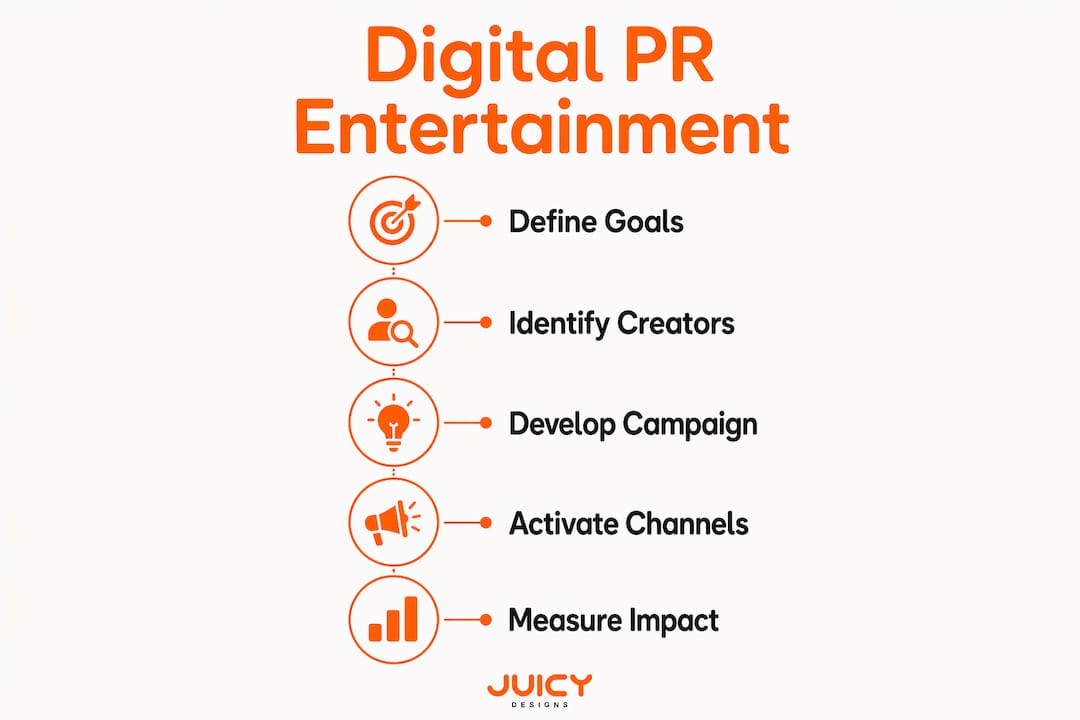
Start with cultural specificity. South Africa’s linguistic and cultural diversity means a single generic campaign rarely lands across all audiences. Work with creators who genuinely represent the communities you want to reach, not just those with the largest follower counts.
Plan your campaign arc well in advance. Entertainment PR is project-based and event-driven, with high-intensity activity building momentum months before a public launch. Map your content calendar around key cultural moments, local holidays, and platform-specific trends.
Compliance matters too. South Africa’s Advertising Regulatory Board (ARB) Appendix K and the IAB SA Content Creator Charter require clear disclosure of sponsored content. Treat this as a baseline, not a burden. Audiences reward transparency, and regulators enforce it.
Examples of successful digital PR entertainment campaigns in South Africa
TDMC’s partnership with Futurelife is a strong local reference point. By shifting from corporate brand messaging to creator-led storytelling, the brand connected with consumers on an emotional level, aligning products with lifestyle and values. Creator content generated two-way conversations through comments and live sessions, reaching communities the brand had not previously accessed.
A local FMCG healthcare brand worked with TDMC in 2025 to add influencer strategy alongside its existing traditional media presence. The result included viral content, rich community conversations, and authentic product feedback from audiences the brand had not previously reached. These are commercial outcomes, not vanity metrics.
For entertainment brands specifically, social media growth built around creator partnerships and platform-native content consistently outperforms broadcast-style campaigns in South Africa’s mobile-first market.
How do you measure digital PR entertainment effectiveness?
Measurement separates professional digital PR from guesswork. Track these metrics across your campaigns:
- Earned media coverage: volume and quality of online mentions and features
- Engagement rate: comments, shares, saves, and live session participation
- Audience sentiment: qualitative tracking of how people talk about your brand
- Referral traffic: website visits driven by PR placements and creator content
- Incrementality: matched-market tests and geo splits to isolate PR’s actual contribution to sales
Influencer marketing in South Africa delivers measurable commercial outcomes when campaigns are structured with clear KPIs from the start. Vanity metrics like follower counts tell you very little. Conversion-linked data tells you everything.
Common challenges and pitfalls in digital PR entertainment
The biggest mistake South African businesses make is treating creators as distribution channels rather than strategic partners. Ingram of TDMC is direct about this: brands that approach influencer relationships transactionally damage both the campaign and the broader creator ecosystem.
Speed is another pressure point. Entertainment PR moves fast, and slow approval processes kill cultural relevance. If your legal and compliance sign-off takes two weeks, you will miss the moment. Build agile internal workflows before you launch any creator campaign.
Finally, avoid the scattergun approach of activating many creators with no strategic brief. A focused campaign with three well-briefed creators who genuinely fit your brand will outperform twenty loosely aligned posts every time.
Future trends shaping digital PR entertainment
First-party data is reshaping how entertainment brands reach audiences. South African advertisers are moving towards targeting based on real purchasing behaviour rather than broad demographics, using tools like Audience Marketplace 2.0 to book precision audience segments across Meta, Google, and TikTok.
AI-powered content discovery is also changing the game. As AI search tools answer entertainment queries directly, brands with strong editorial footprints and structured digital PR presence accumulate visibility in AI-generated answers. Building that presence now puts you ahead of competitors who are still thinking in traditional SEO terms alone.
Creator economies will keep growing. South Africa’s digital advertising market is valued at USD 1.5 billion, with influencer marketing spend projected to reach R2 billion. The brands investing in always-on creator relationships today are building the audience equity that will compound over the next five years.
Juicy Designs delivers real digital PR results for South African businesses
Juicy Designs gives South African businesses a direct line to founder-led digital marketing without the agency overhead or long-term contracts. Where traditional agencies add layers between your brief and the people executing it, Juicy Designs works directly with you to build campaigns that connect with South Africa’s mobile-first, creator-engaged audiences. See our entertainment marketing service for the full scope.
The results are concrete: an average return on ad spend of 4.8x, and a 312% increase in qualified leads for a local dealership. For entertainment brands and businesses using entertainment-style PR to build buzz, Juicy Designs brings the full-funnel capability, from social media advertising and influencer strategy to SEO and Google Ads, all under one roof.
Ready to build a digital PR strategy that fits your brand and your budget? Visit Juicy Designs’ digital marketing services page and get in touch with the team directly.
Key takeaways
Digital PR entertainment drives cultural attention through creator-led, platform-native campaigns, and South Africa’s young, mobile-first audience makes it one of the highest-opportunity markets for this approach.
| Point | Details |
|---|---|
| Entertainment PR vs corporate PR | Entertainment PR prioritises attention and cultural buzz; corporate PR focuses on long-term trust and reputation. |
| South African audience advantage | 33.6% of South African social media users actively follow influencers, surpassing the 22% global average. |
| Creator partnerships over campaigns | Always-on creator relationships outperform one-off activations for sustained commercial results. |
| Measure what matters | Track earned media, engagement rate, referral traffic, and incrementality, not just follower counts. |
| Juicy Designs for local growth | Juicy Designs delivers an average 4.8x ROAS with founder-led digital marketing tailored to South African businesses. |
FAQ
What is digital PR entertainment?
Digital PR entertainment is the practice of managing public narratives for entertainment projects and personalities through digital channels like social media, influencer partnerships, podcasts, and earned media, with the goal of generating cultural buzz and audience attention.
How does digital PR differ from traditional PR in entertainment?
Traditional PR relies on press releases and print media; digital PR uses online platforms, creator partnerships, and real-time engagement. Digital PR also delivers measurable results and long-term search visibility that traditional coverage cannot match.
Why does digital PR matter for South African businesses?
South Africa has a large internet user base, with 78.9% internet penetration, and a young median age of 27.7 years, placing most of the population in demographics most responsive to creator-led digital PR campaigns.
How do you measure digital PR entertainment success?
Track earned media volume, audience engagement rate, referral traffic, and sales incrementality using matched-market tests or geo splits to isolate the actual contribution of your PR activity.
Can Juicy Designs help with digital PR entertainment in South Africa?
Yes. Juicy Designs provides full-funnel digital marketing services including social media, influencer strategy, and SEO, with an average 4.8x average return on ad spend for South African businesses.